Editorial Design / Thesis / Art Direction / Print
The Pause Initiative: An Unconventional Travel Catalogue Thesis Project
Thesis Proposition
This thesis proposes that travel can be reimagined as a mindful practice of slowing down, pausing, and “traveling without traveling.”
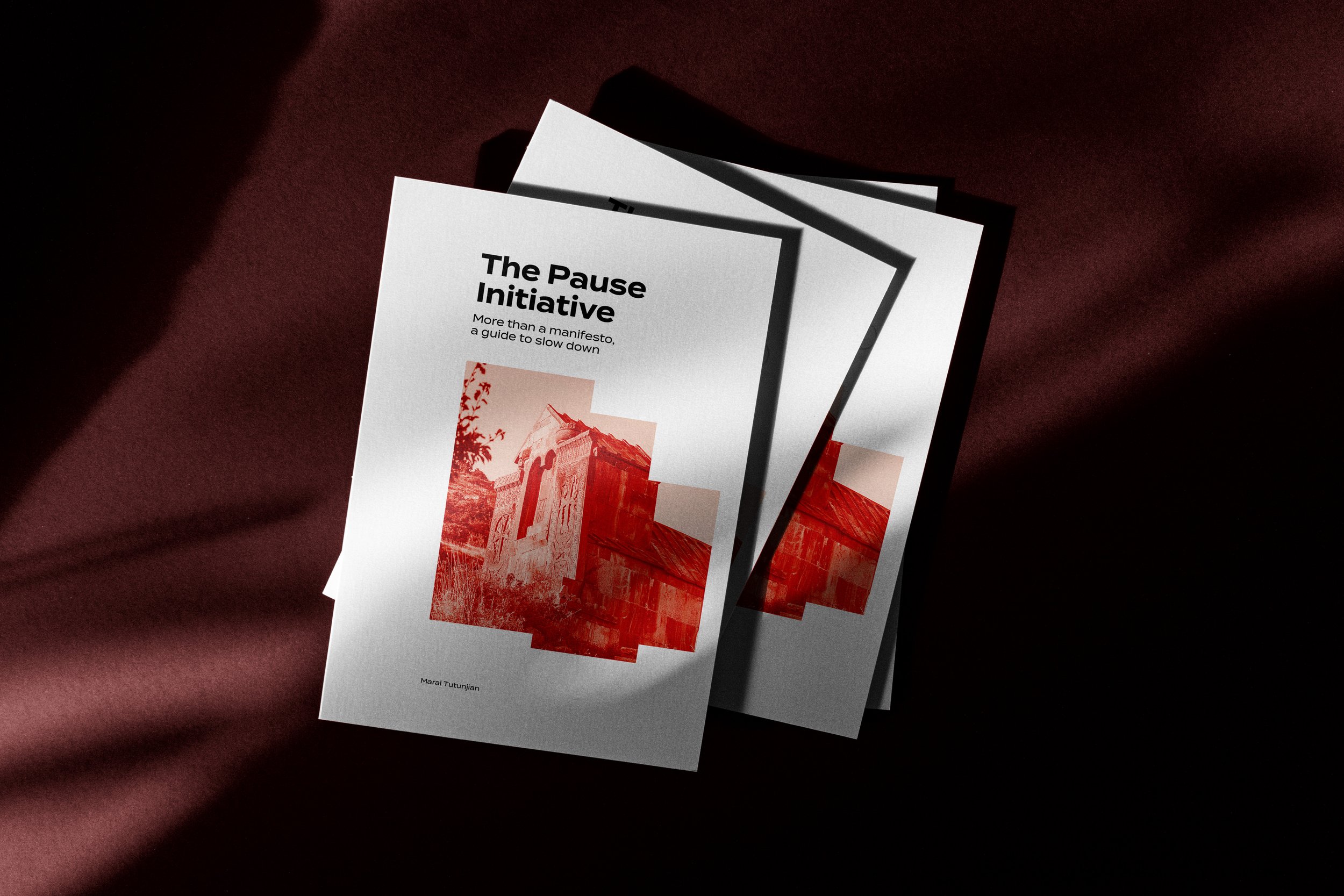
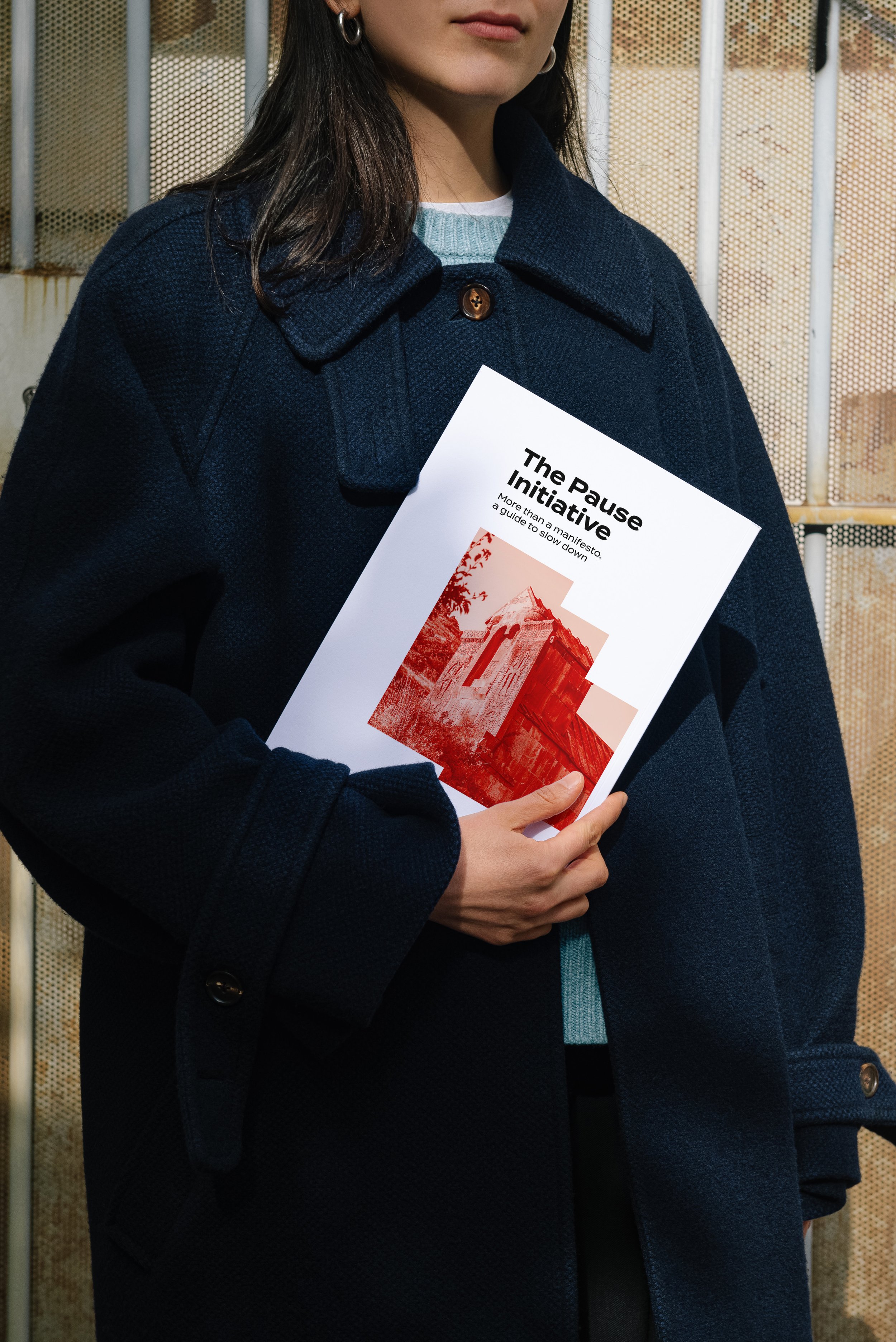
The Pause Initiative is more than a manifesto, it’s a guidebook that invites people to slow down while traveling
and argues that stillness, intentional restraint, and presence through absence can foster meaningful cultural connection while reducing pressure on fragile environments, overcrowded heritage sites, and local communities. Through an unconventional guidebook and the tradition of stamp collecting as a form of cultural engagement, this project positions pausing as a sustainable and thoughtful act alternative to movement-driven tourism.
Research
I conducted extensive research on the topic of sustainability in tourism. Rather than approaching this topic in the traditional way — by promoting sustainable and eco-conscious travel initiatives — I wanted to take a different approach by inviting people not to travel. I essentially designed a non-travel guidebook.
-
Research shows that there is a lack of transparency and trust in sustainable tourism, and that the communication of sustainability is often unclear, with greenwashing becoming an increasing problem.
-
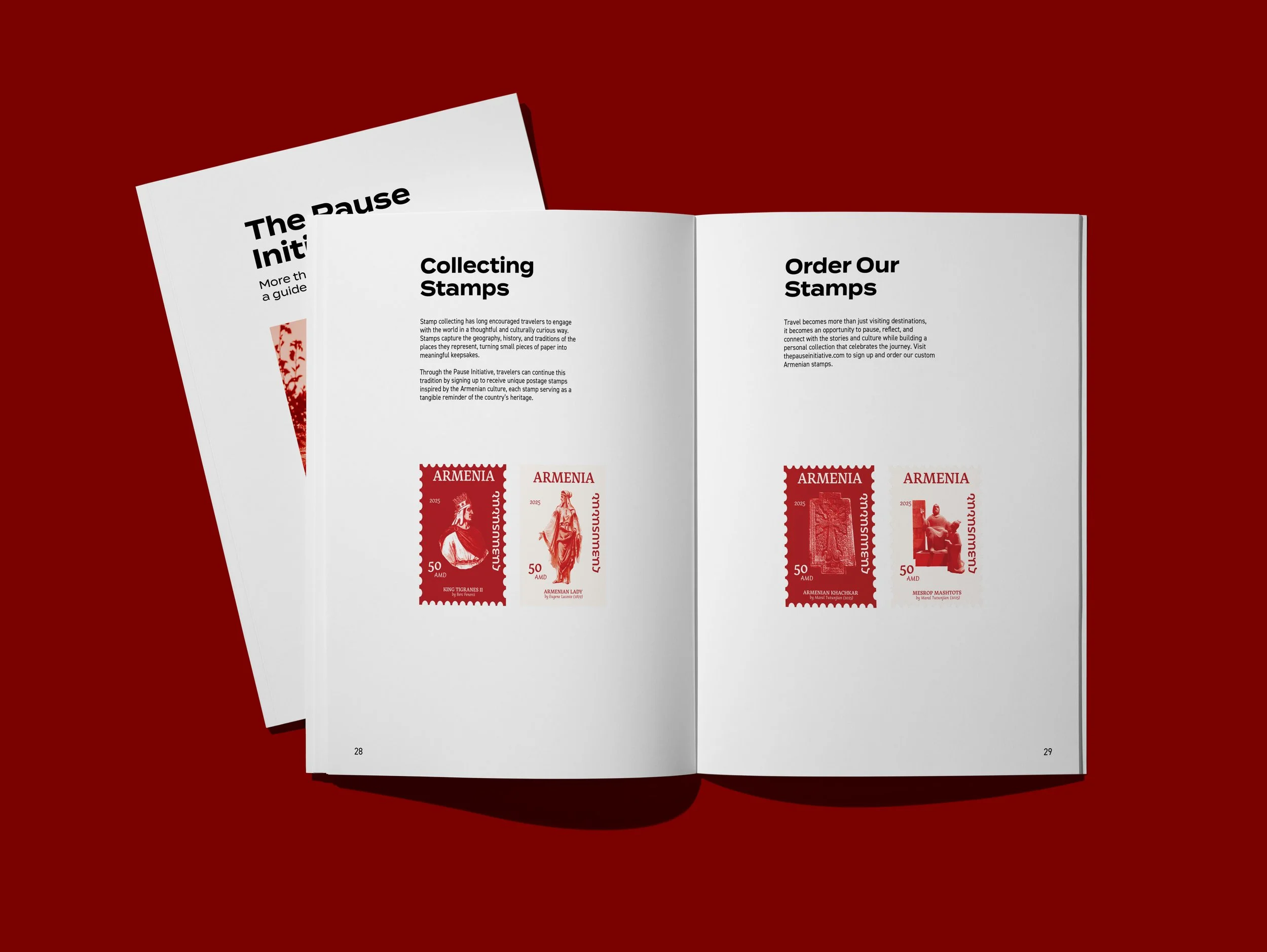
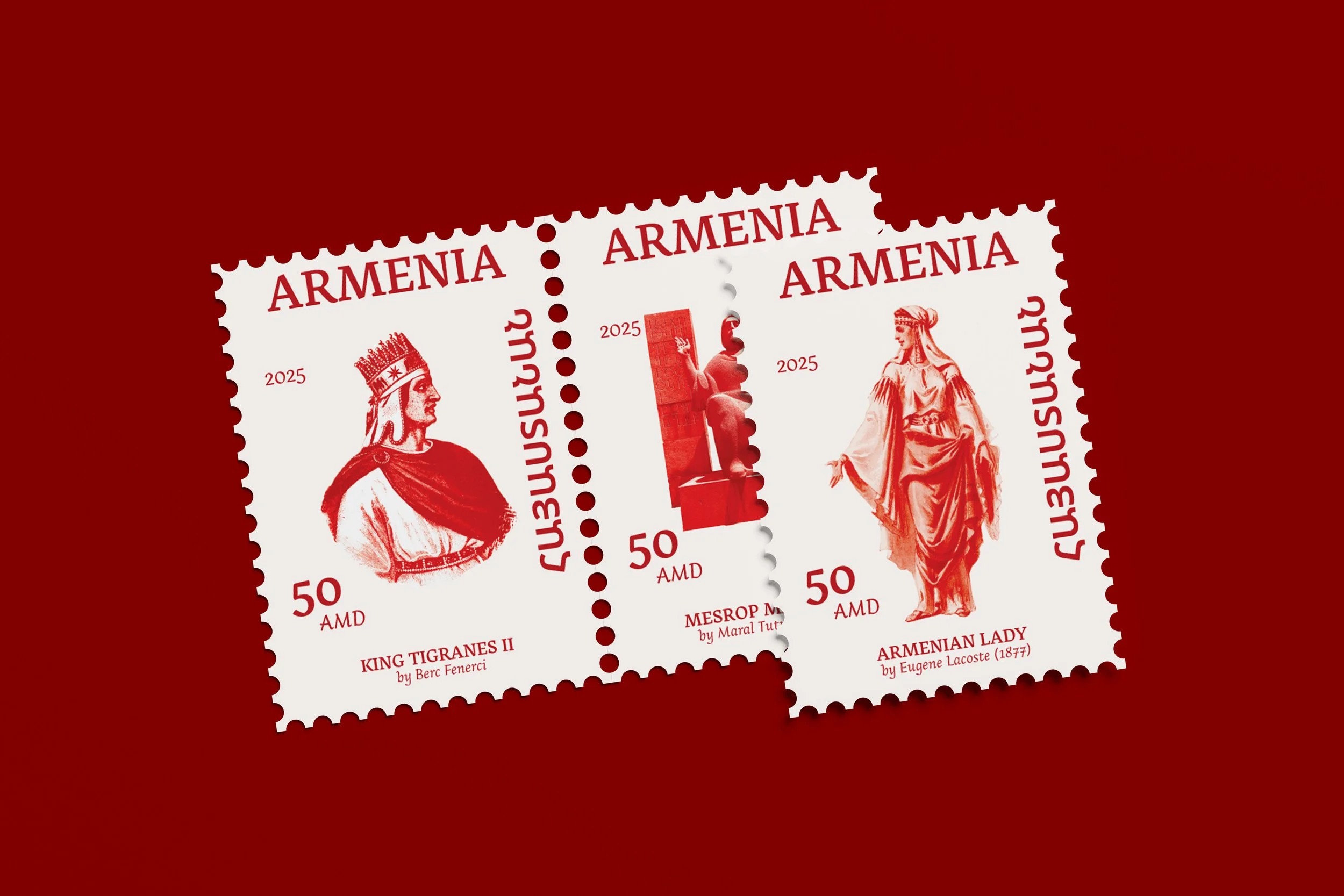
Research also showed that participatory tools that achieve lived validations of sustainability could be a solution, and therefore I decided to use the idea of stamp collecting as a form of validation. By pausing and not traveling, we could collect unique postage stamps that serve as a validation of our commitment.
Postage Stamps
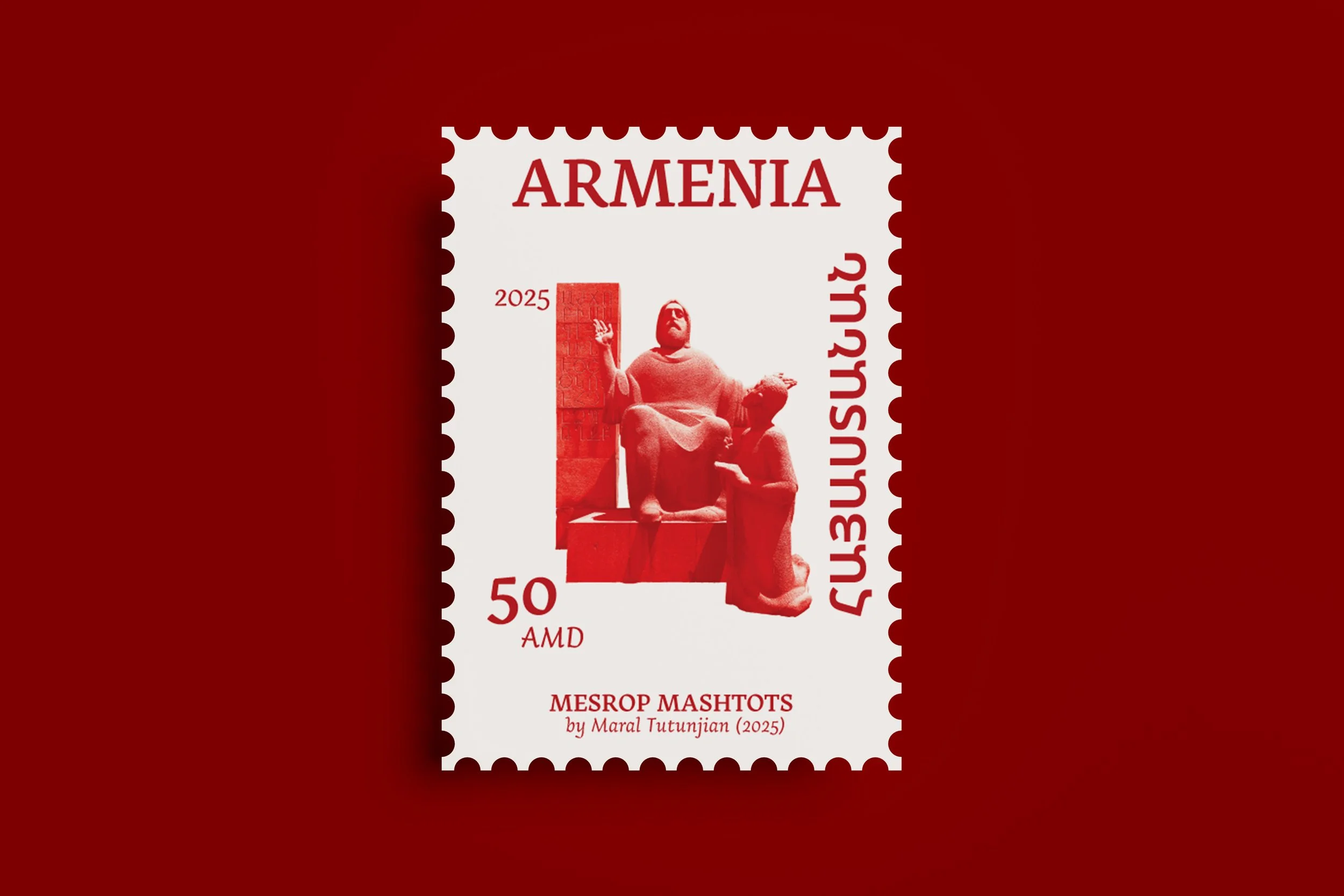
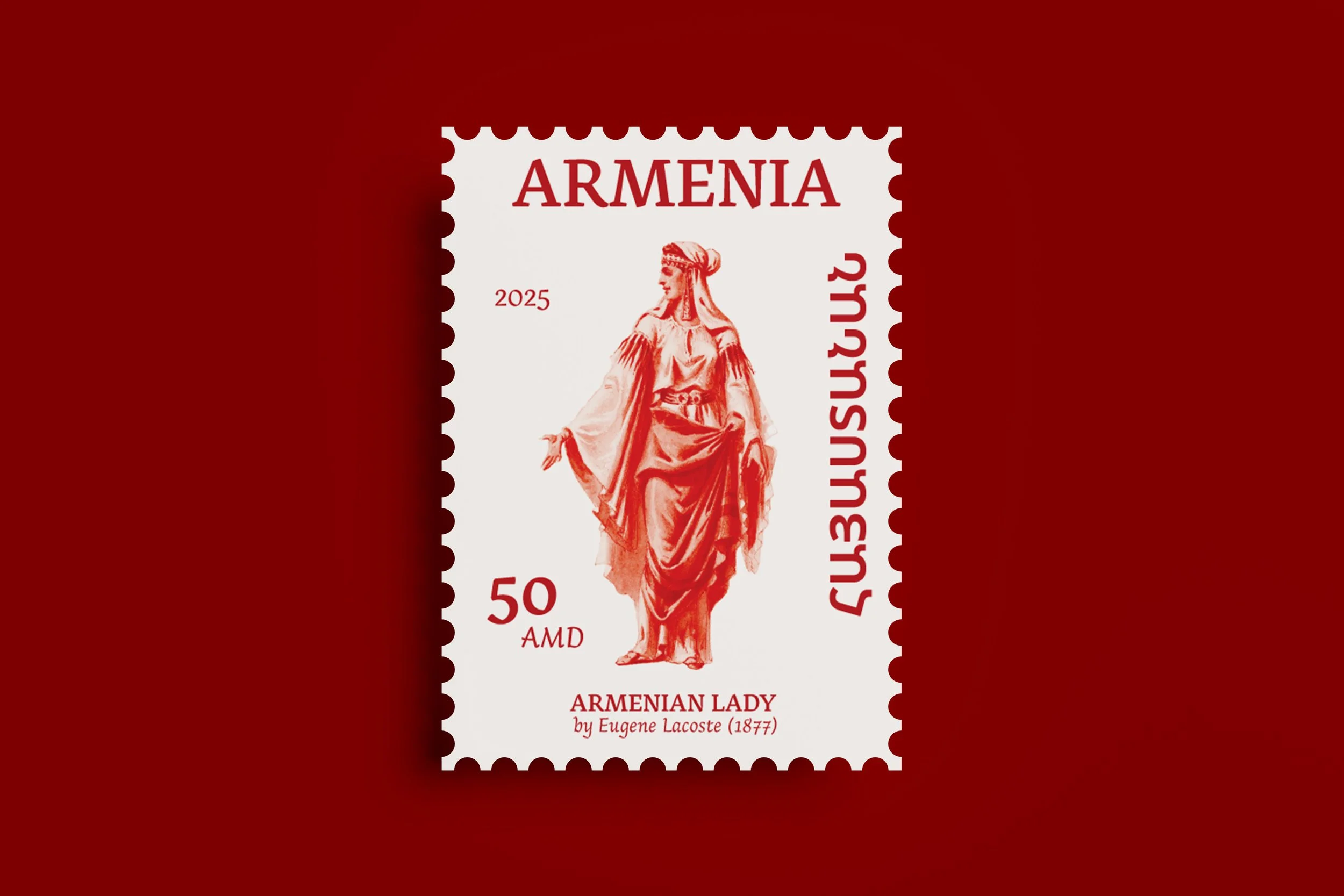
I researched postage stamps and philately which is the study and collection of stamps and how they became more than just tools for sending mail.
-
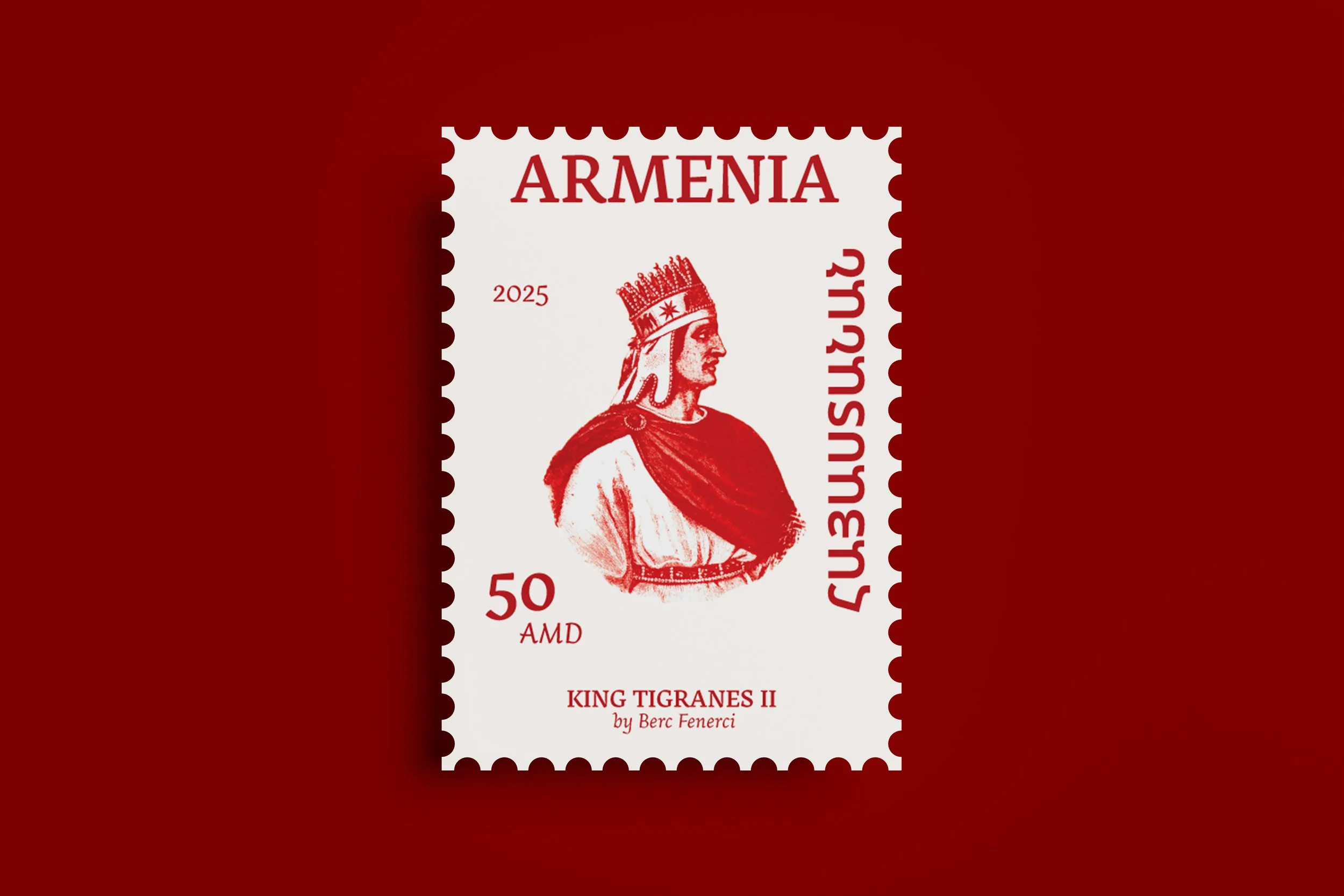
Stamps tell stories about a country’s history, culture, and important figures, and collectors value them for their design, narrative, and the way they preserve moments in time. This showed me that small objects can carry cultural meaning, which connects to my thesis idea of representing Armenian heritage symbolically.
-
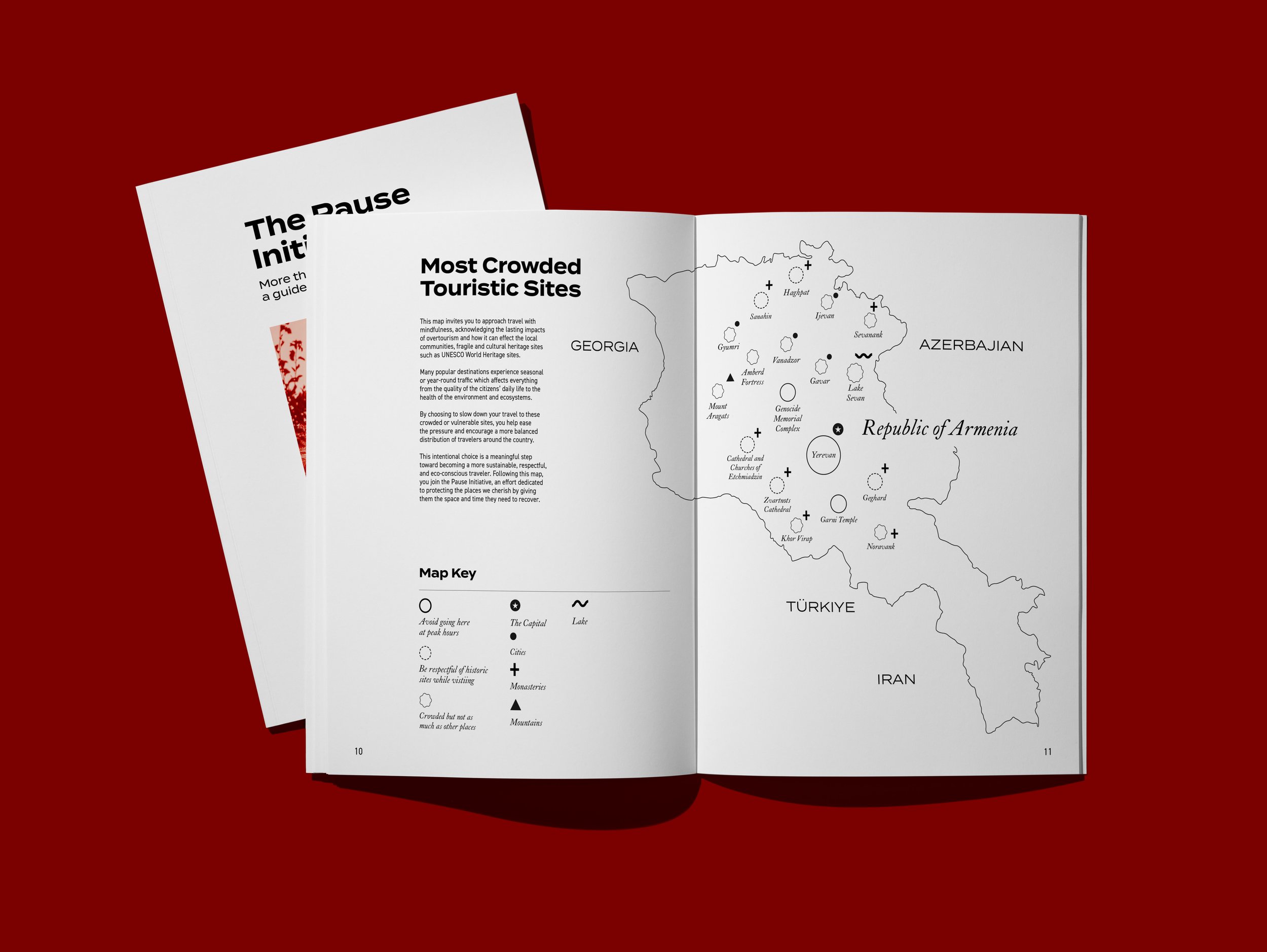
Since my project encourages people to travel less to crowded sites in Armenia, stamps provide a meaningful way to engage with the culture without visiting every location. They act as both a reward for joining the Pause Initiative and a way to connect with Armenia’s history and identity through a small, collectible object, echoing the traditions of philately.
Visual Design
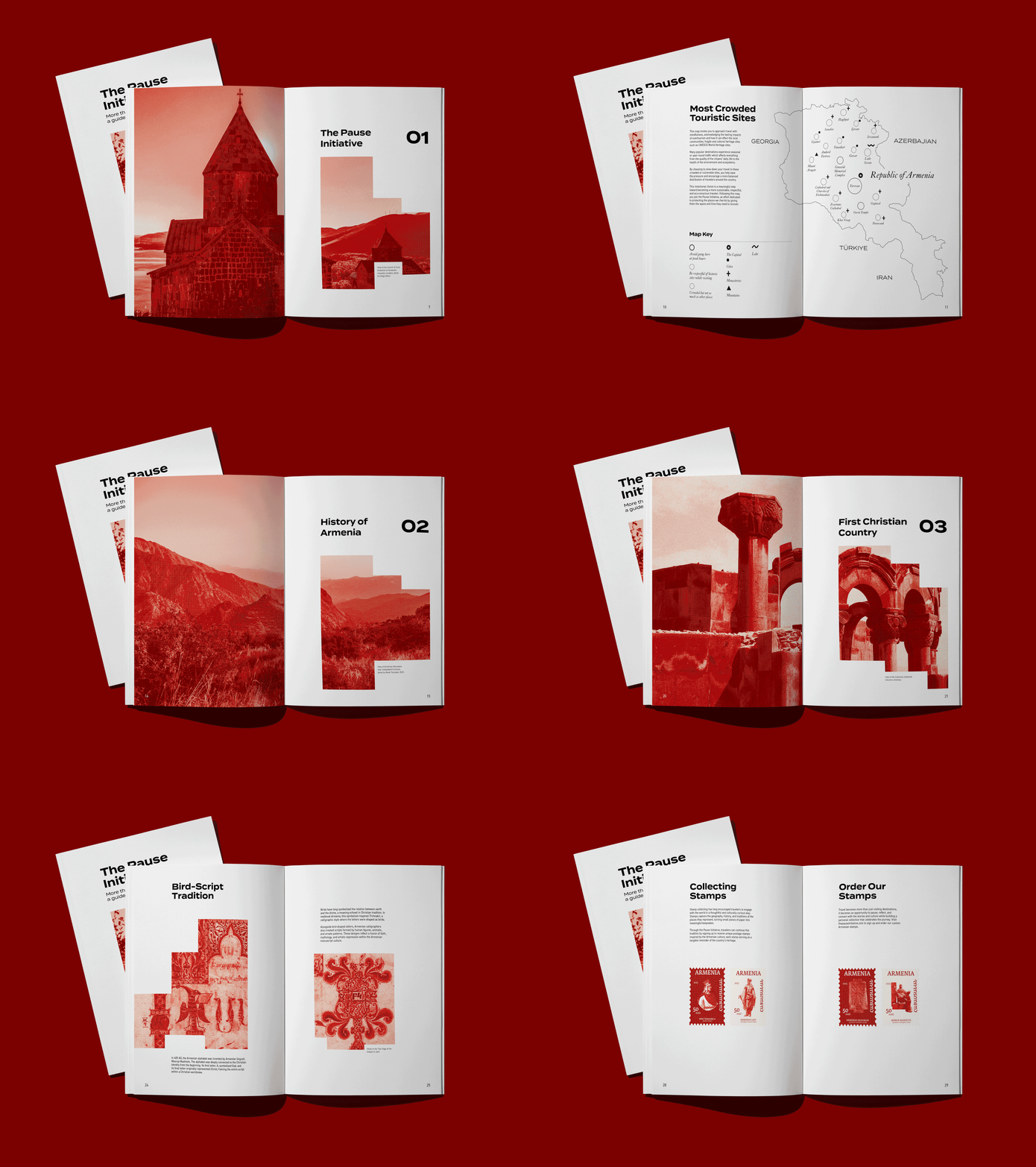
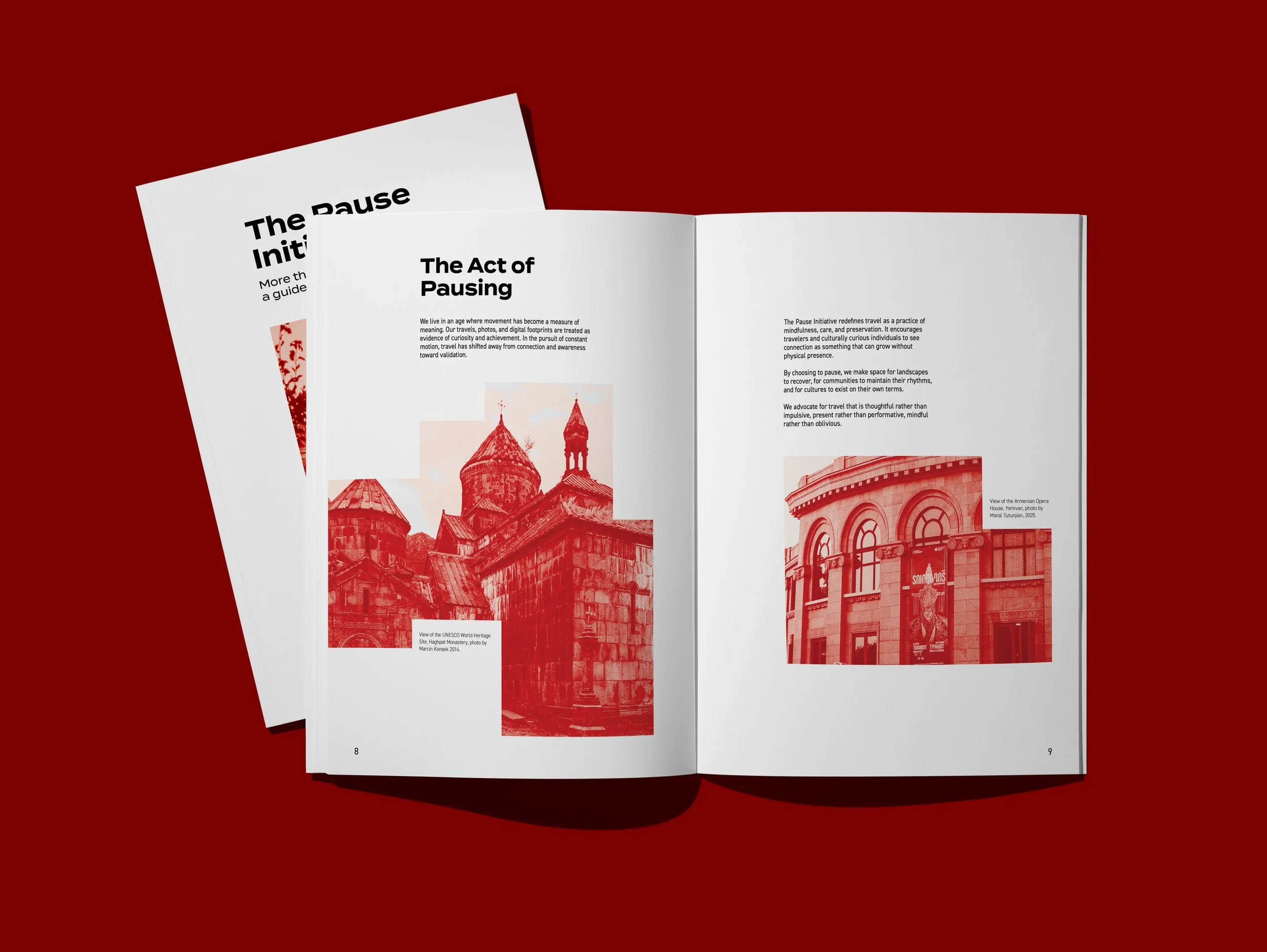
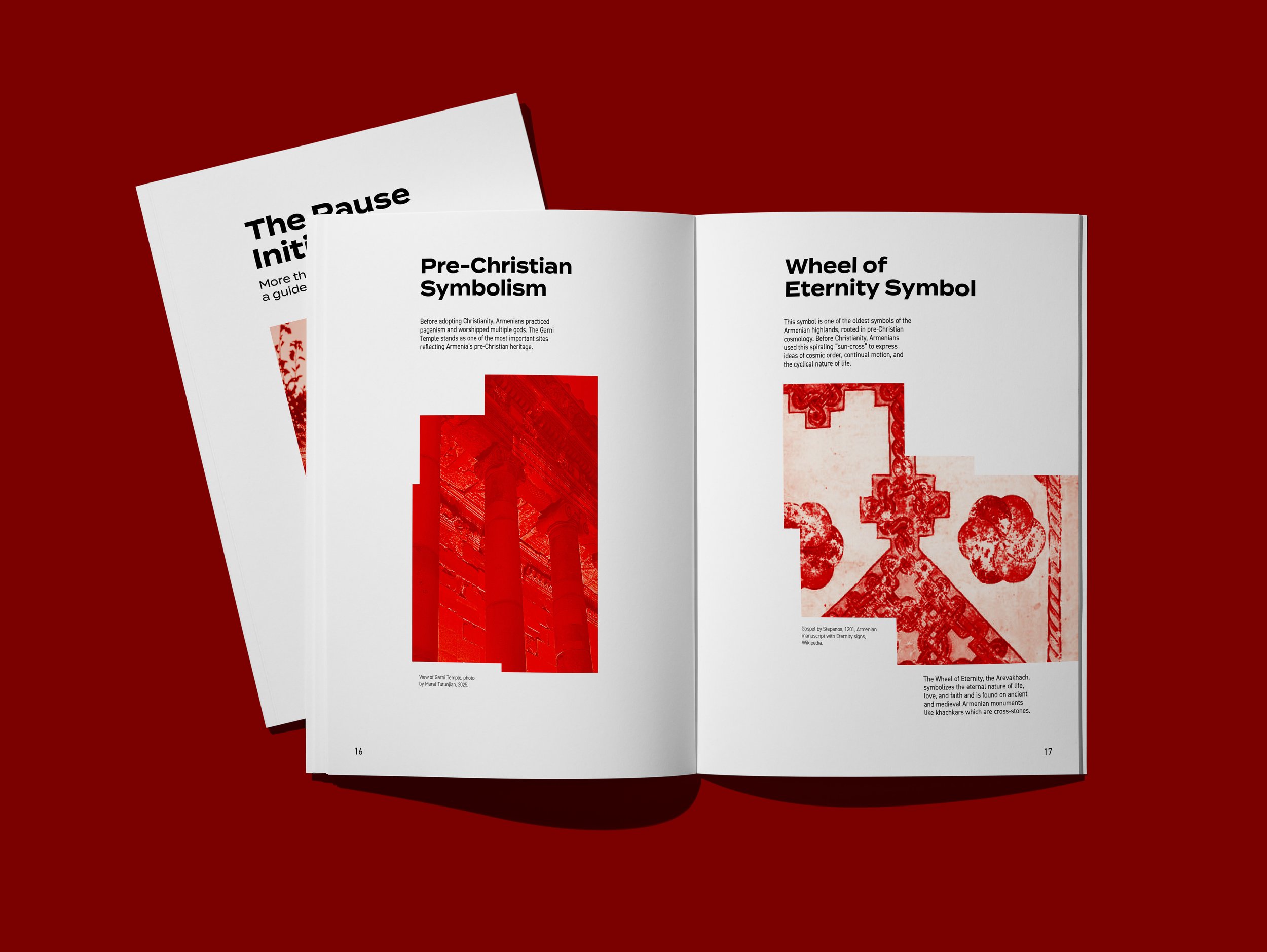
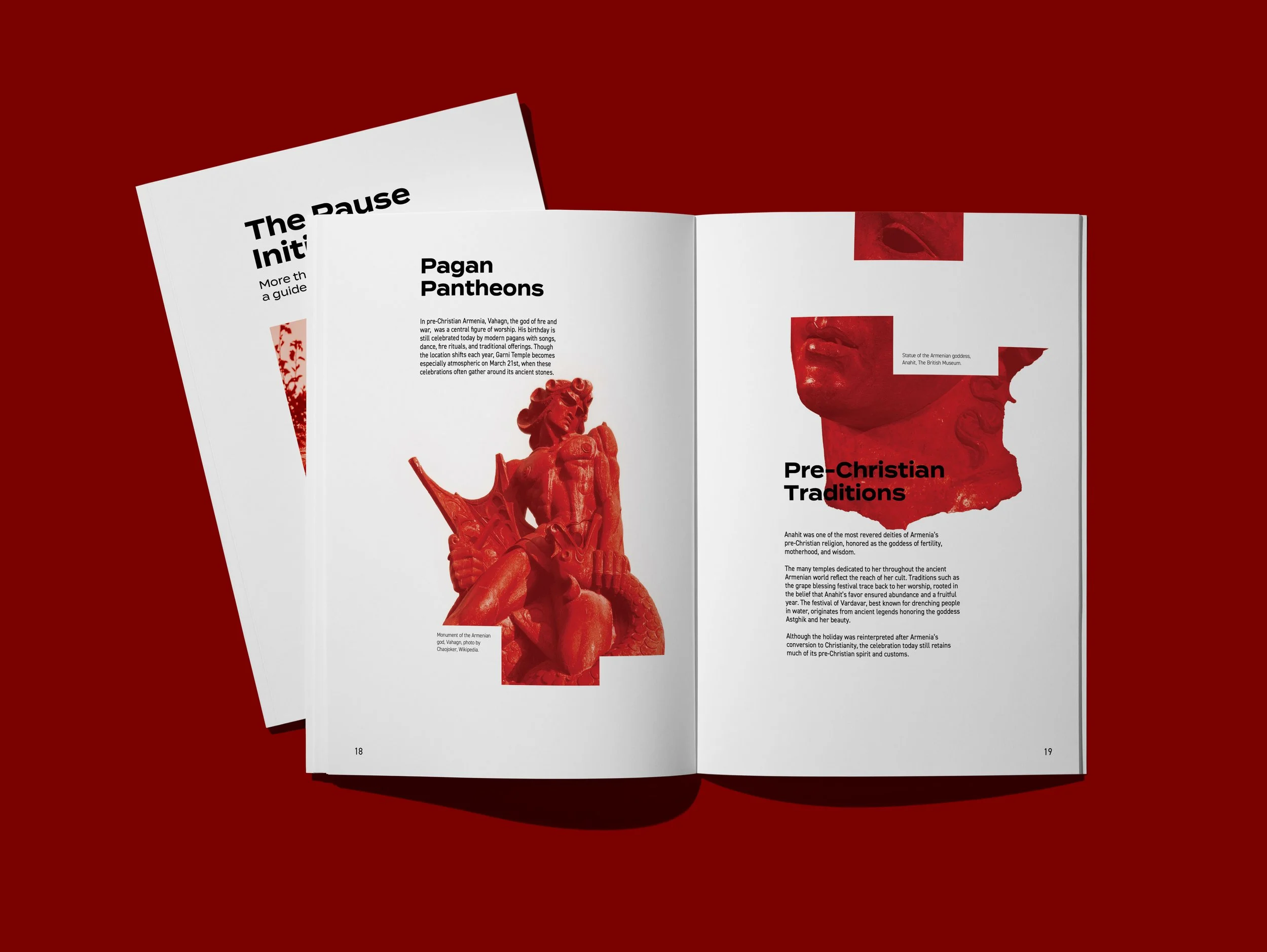
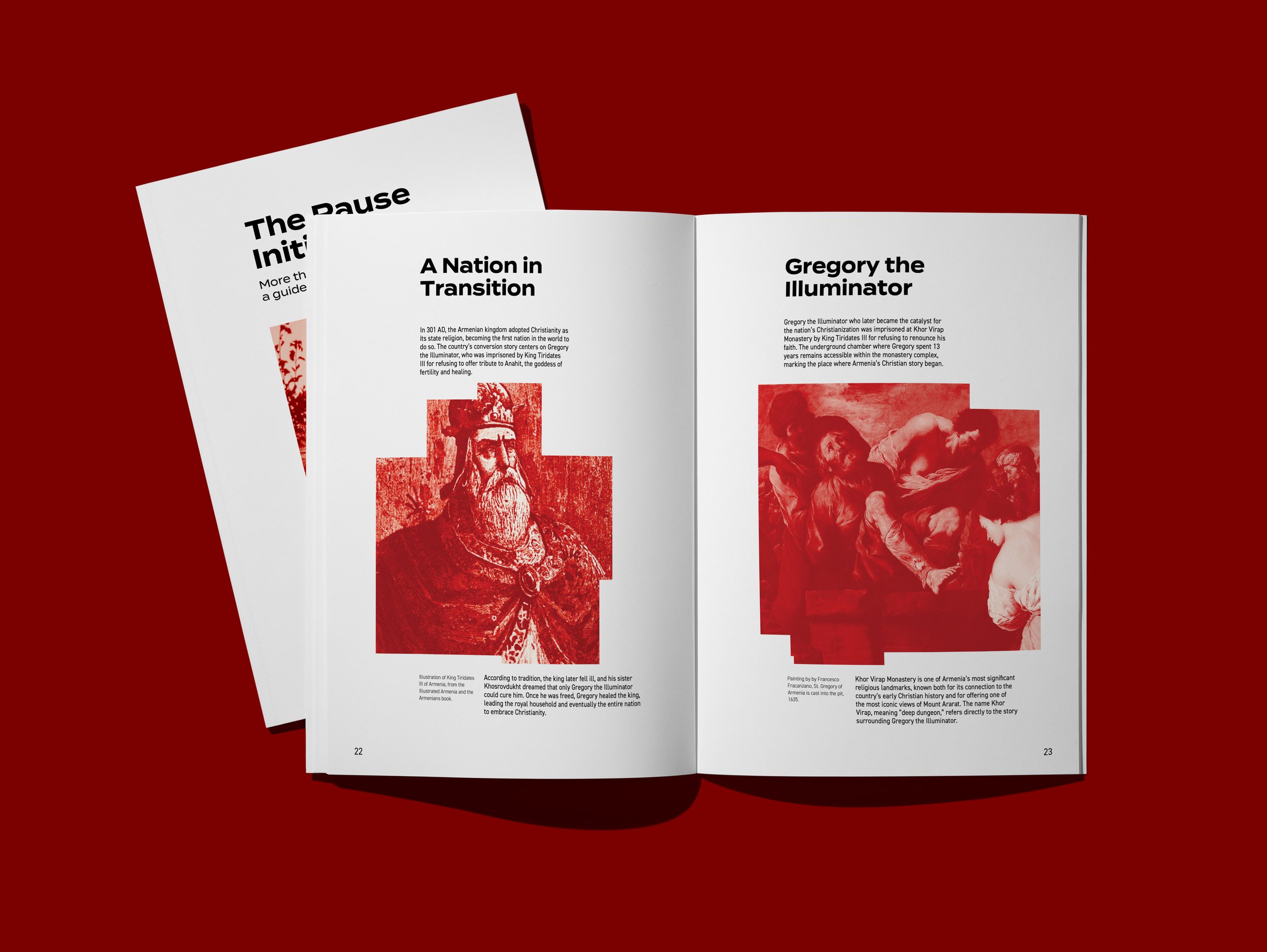
My research into over tourism, sustainable travel, and how guidebooks use imagery helped shape both the content and design of this project. Traditionally, guidebooks rely on attractive photos to encourage people to visit specific places.
-
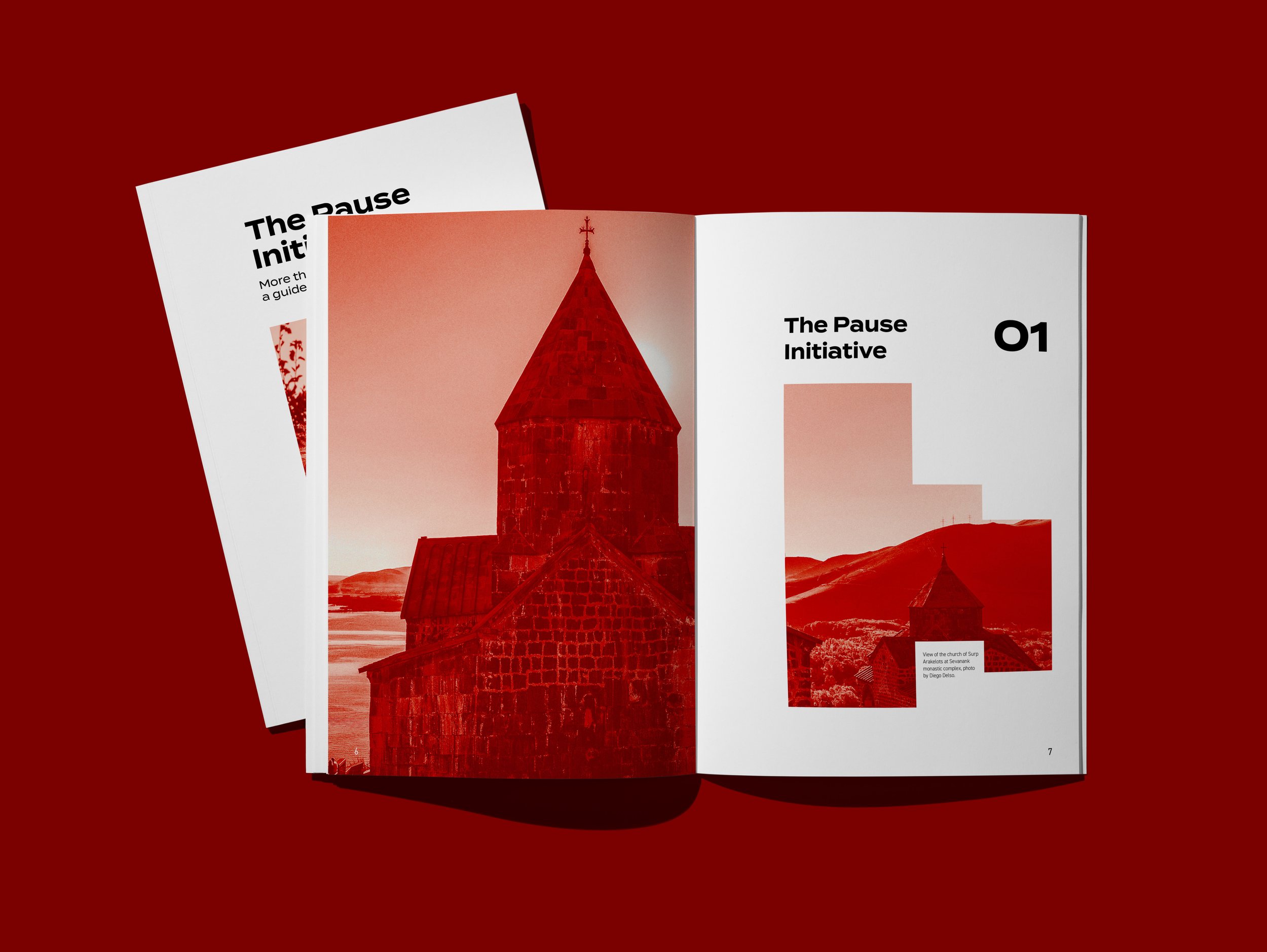
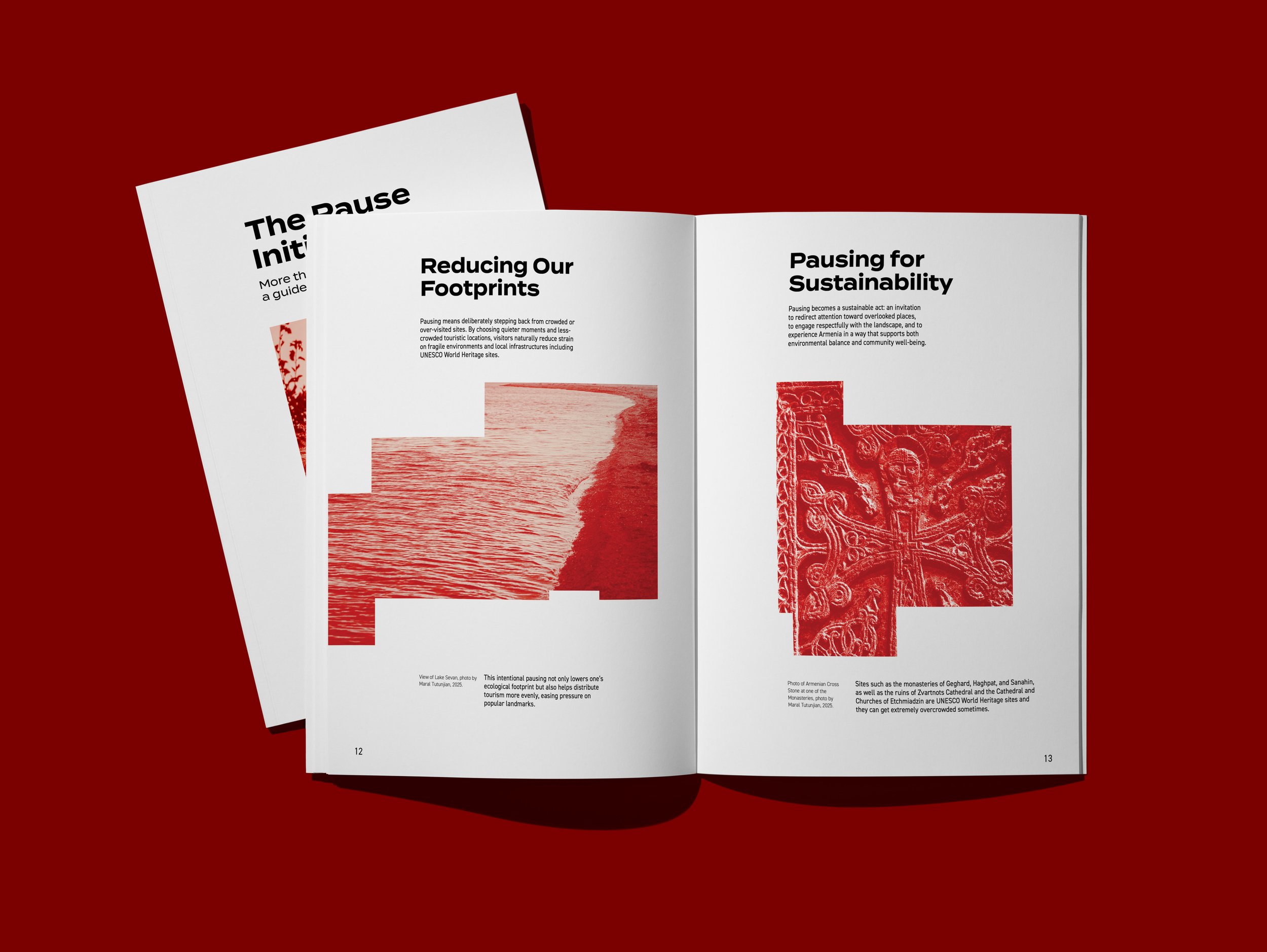
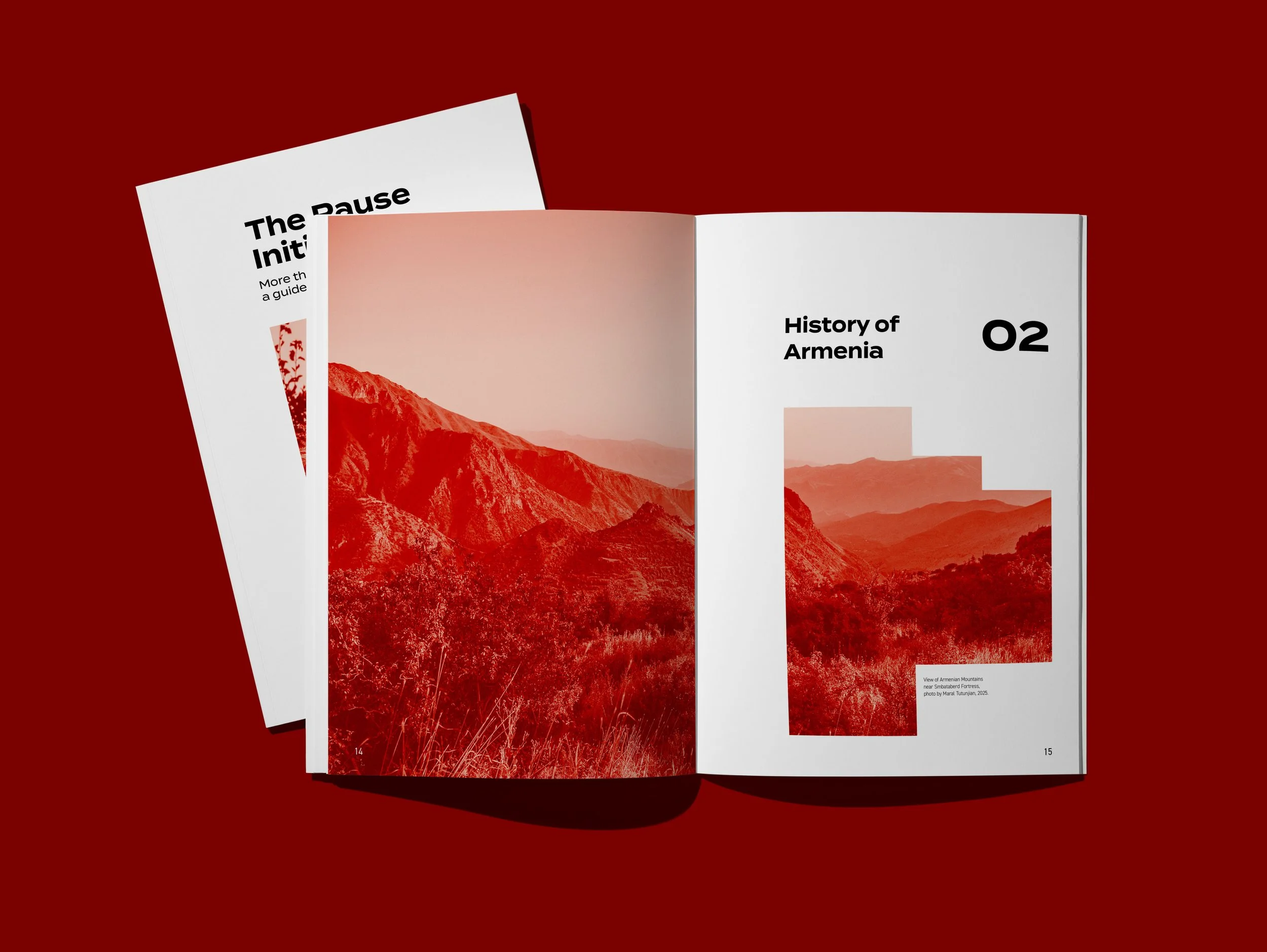
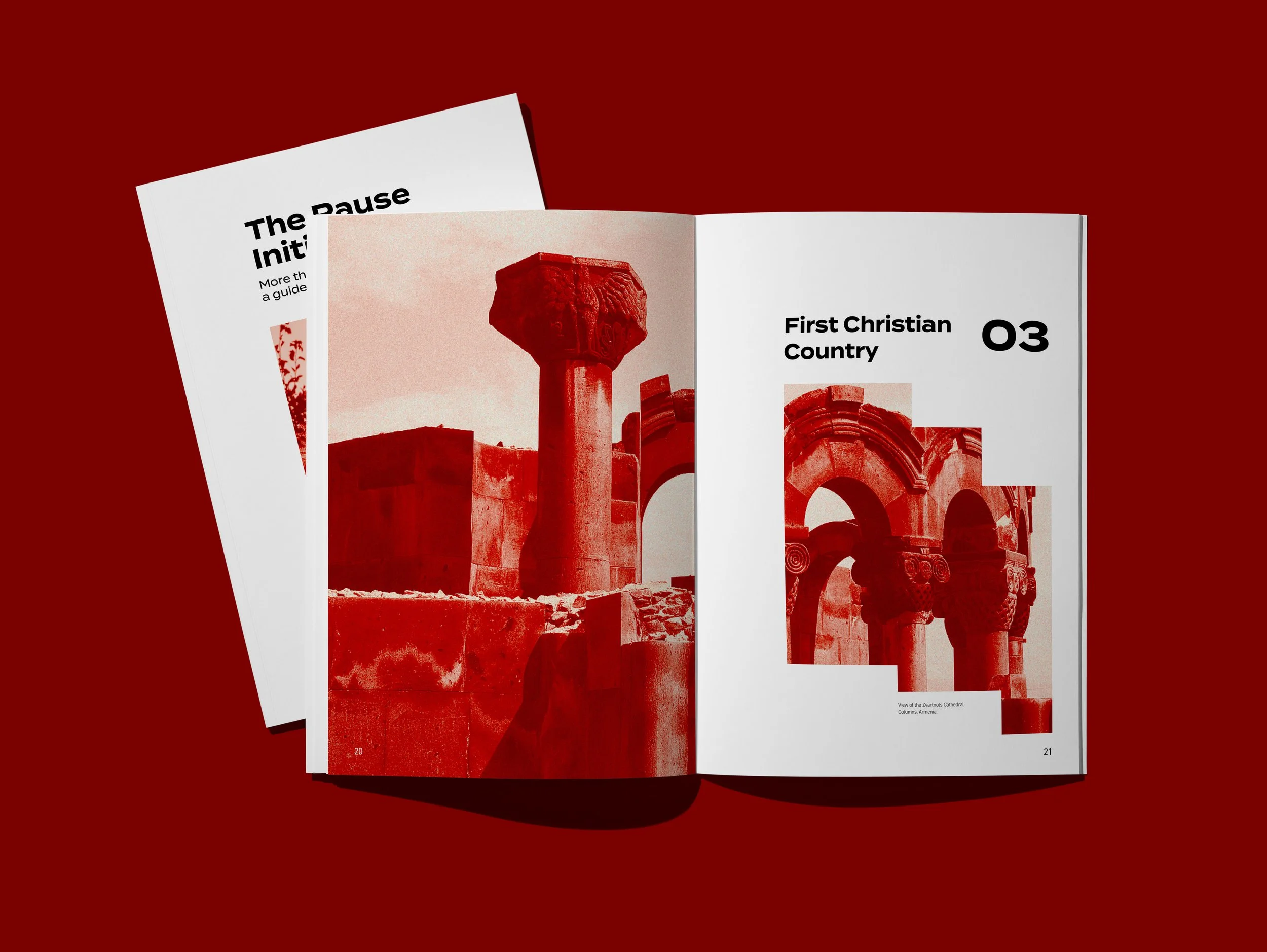
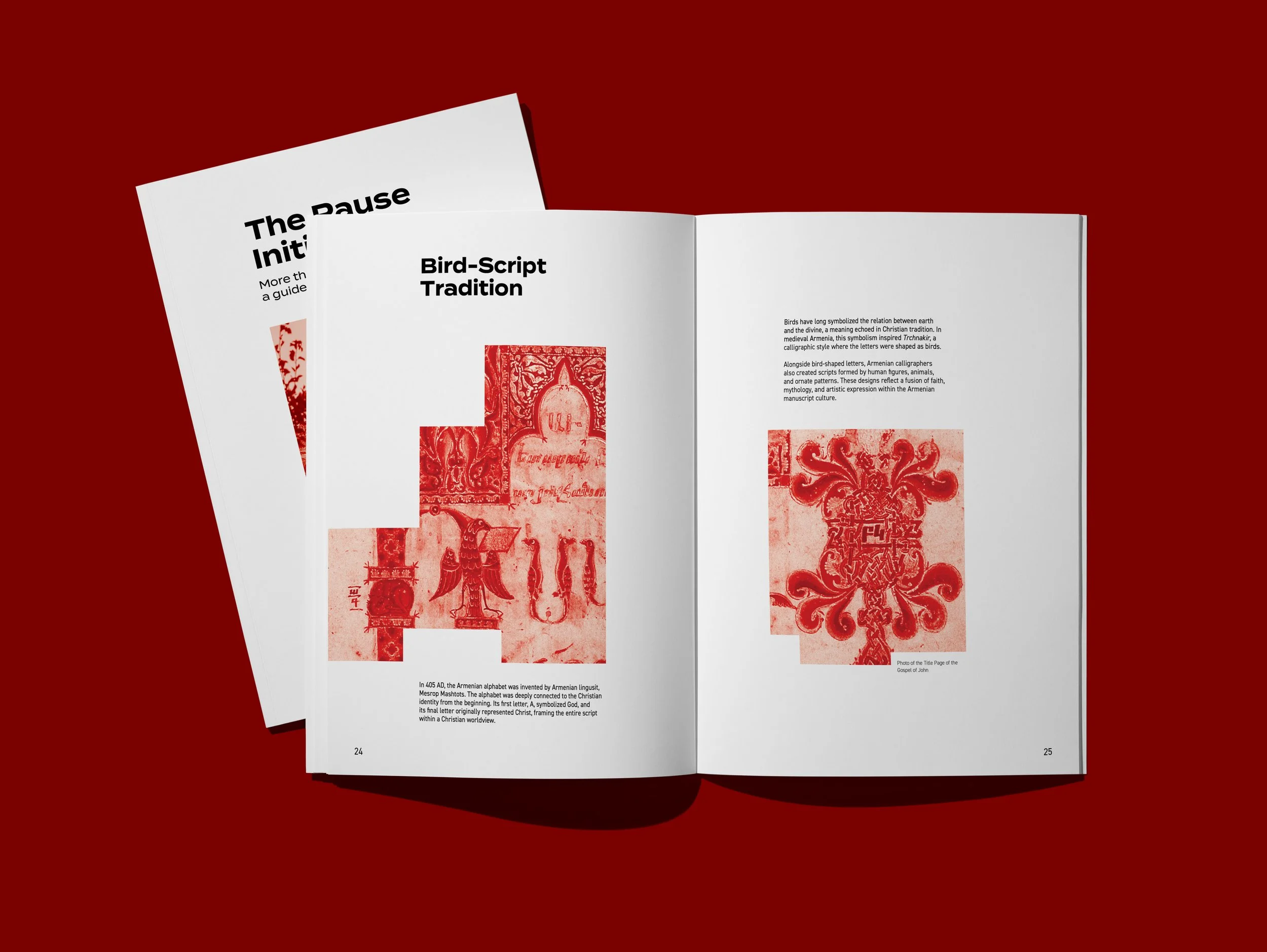
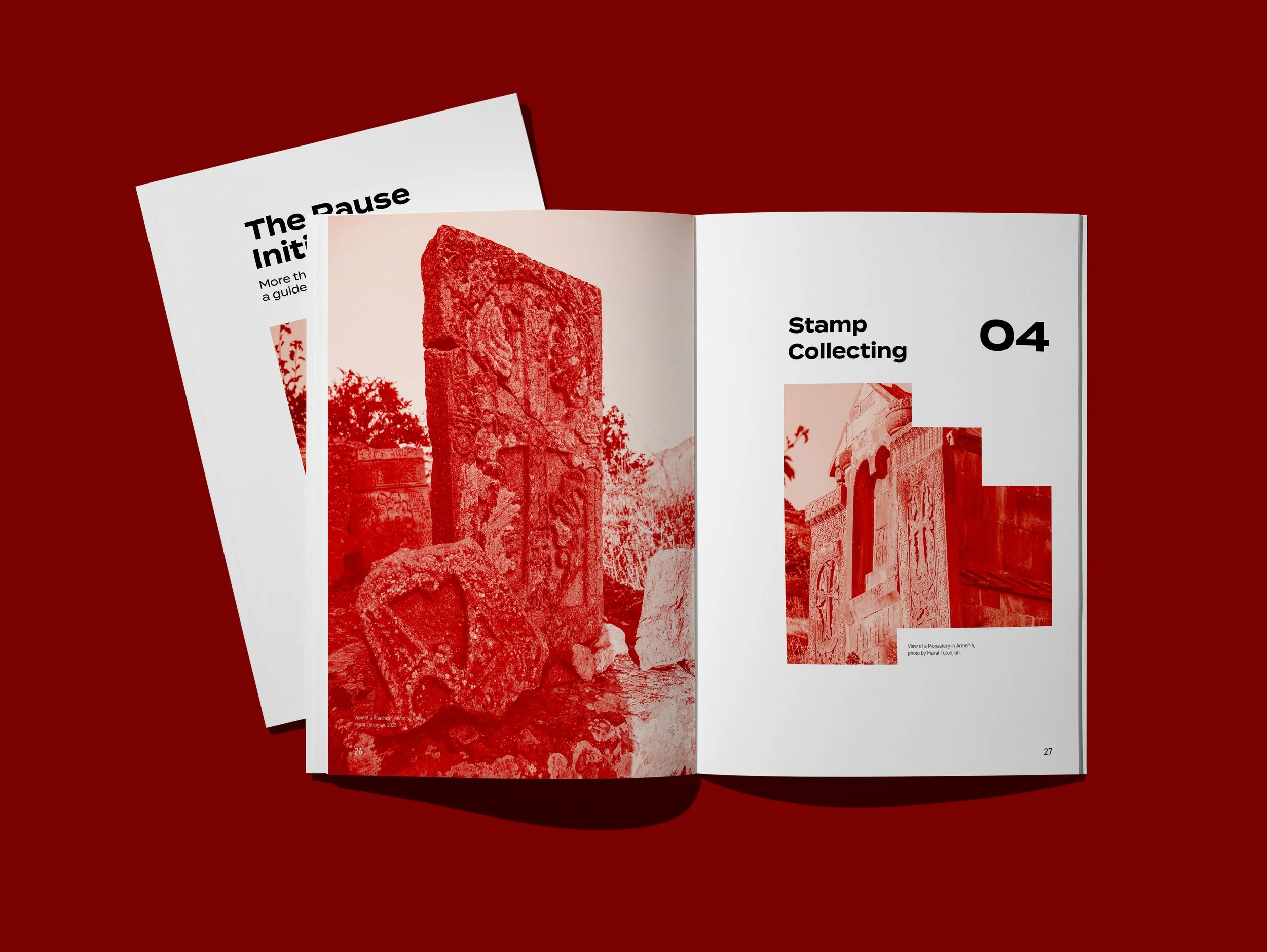
In my project, I decided to do the opposite. I used shape-blocking to cover the images of popular destinations in Armenia, because I’m advocating for pausing and visiting these places less. While studying visual culture and sustainability, I learned that absence and negative space can still carry beauty. Stillness, restraint, and mindful looking can also be forms of cultural connection. This understanding guided my decision to let the “blocked” areas become part of the visual language.
-
The blocking shape itself comes from the architectural form of one of Armenia’s well-known touristic sites, so even though the image is covered, the design still ties back to Armenian culture. I experimented with some photos of different fortresses in Armenia to create an abstract form to use as the general layout of my imagery treatment. I used this form as my starting ground for my compositions and altered each one as I went to create a variety and unique composition. Eventually, my shape turned into this block that covered the destinations to create distance and stillness.


The Importance of Red Color
In my project, I chose the color red as the primary color because of its deep cultural significance in Armenian history and identity.
-
Red symbolizes the Armenian Highland, and the preservation of the Christian faith, and the country’s. Red is everywhere from the flag to carpets, rugs and textile to pomegranates which is one of the symbols in Armenian mythology, etc.
-
By narrowing the palette to a single culturally rooted color, the design becomes more intentional and grounded, reinforcing the project’s connection to Armenian heritage while also creating a strong, unified visual language for the non-travel guidebook.